• Anchor Chain
    Anchor Chain
  • ITAL Anchor Winches
    ITAL Anchor Winches
  • MZ Electronics & Chain Counters
    MZ Electronics & Chain Counters
  • Anchors & Anchoring Accessories
    Anchors & Anchoring Accessories
  • Savwinch
    Savwinch
  • chain image

    Frequently Asked Questions

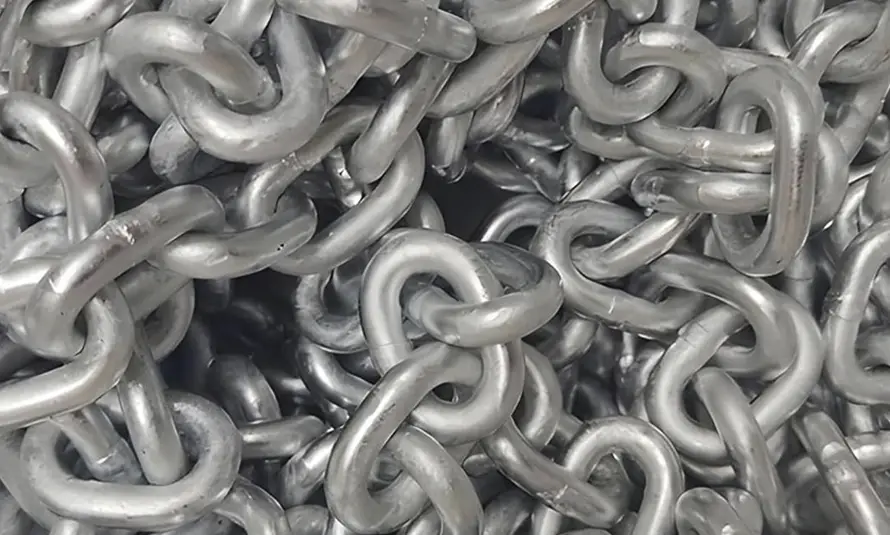
    Galvanised marine anchor chain is a type of chain that is specifically designed for use in harsh marine environments. It is made of high-strength carbon steel or alloy steel and is coated with a layer of zinc to protect it from rust and corrosion in saltwater environments. The benefits of using galvanised marine anchor chain include its resistance to corrosion, durability and strength. It is also cost-effective and easy to maintain.
    There are two main types of galvanised marine chains: Low Carbon Steel (Grade L / Grade 30) and Alloy Steel / High Carbon Steel chains, typically Grade 40 to Grade 45 and hot-dipped galvanised. Hot-dipped galvanised chains are more durable and have a thicker protective layer of zinc coating to reduce corrosion. Galvanised chain comes in many different sizes such as 6mm, 8mm, 10mm, 13mm, 16mm & 20mm short link anchor chain. Check out Ozzi Marine’s FAQ’s on choosing length and type of anchor chain for further guidance or give us a call to discuss your situation.
    The size (chain length & chain link dimensions) of the galvanized marine anchor chain you choose depends on the size of your boat, the windlass / gypsy fitted and anchoring conditions such as depth, ocean currents & weather. The chain link size of anchor chain is specified by the boat manufacturer. Check out Ozzi Marine’s FAQ’s on choosing length and type of anchor chain for further guidance or give us a call to discuss your situation.
    The length of anchor chain is determined by where you will use the boat, anchoring depth, anticipated weather & ocean current conditions and the capacity of your anchor locker. If the vessel is only operating in inland or sheltered coastal waters, you won’t need as much as a vessel operating offshore / traveling along the coast. A good estimate of the length of chain needed for most conditions is to use a ratio of 7:1 of the anchoring depth + boat bow freeboard. e.g. Morton bay averages 6.8m deep, bow freeboard is 1.8m so the estimated chain needed = (6.8+1.8) x 7 = 60m. When deciding what length of chain always consider the worst-case scenario. Should you get caught in bad weather, experience a strong ocean current or plan to leave the boat unattended you will want to put a lot more chain out than in normal anchoring conditions. Talk to an Ozzi Marine expert who can help you decide the right length of anchor chain for your situation.
    To maintain your galvanised marine anchor chain, you should rinse it with fresh water after every trip or as soon as you have access to fresh water. For best results the chain should be end-for-ended every 12 to 24 months as this allows the chain to wear evenly at each end. The anchor locker should be well drained and cleaned regularly to prevent the chain sitting in wet sand at the bottom of the anchor locker.
    The lifespan of a galvanized marine anchor chain depends on the quality of the chain, the protective zinc coating thickness, frequency of use and how well it is maintained. Generally, a well-maintained galvanized marine anchor chain can last between 5 to 10 years.
    There are many types of galvanized anchor chains and stainless steel chain available around the world. Different types of marine chain have different dimensions. It is important to make sure you select the size and type of chain that is compatible with your windlass Gypsy / chainwheel. There will be a marking on your Gypsy, typically a code that will determine the size and type(s) of chain you can use. It’s best to check the code with the information provided by the windlass manufacturer. Talk to an Ozzi Marine expert who can help you determine the right type of chain to ensure compatibility with your windlass.
    Chain is often manufactured by or for lifting companies. Often these companies provide low grade carbon steel lifting chain as Anchor chain. These are usually marked grade L or Grade 30 and usually have a thinner galvanised zinc coating between 35 and 55 micron thickness. Marine Chain should be between Grade 40 and Grade 45. These chains are high grade carbon / alloy steel, are harder, approximately 50% stronger and have a galvanised coating of around 85 microns for greater corrosion resistance in saltwater environments. Marine chain between Grades 40 and 45 will last longer because it is stronger so won’t stretch as easily and is harder so won’t wear as quickly as Grade L /Grade 30 chain.
    Anchor chain should be stamped with identifying marking of the company supplying the chain. It should be stamped with the Grade of chain. Example: OMC and G43 or OMC G43. The chain should have a test certificate available for quality and conformance assurance and is often required by insurance companies. There is a lot of cheap chain sold for anchoring without markings or test certificates. Often the link welds are not a good standard, strength of the chain is unknown, and you don’t know if it is manufactured to the right standard.
    No, we don’t recommend re-galvanising anchor chain. Galvanising involves high heat and acid baths which can compromise the steels strength via a process called hydrogen embrittlement. The chain is no longer a tested chain and its strength may be compromised. Used anchor chain has been in service for some time and showing signs of wear or rust will likely have chain links that are stretched, have metal fatigue and links that are worn. Stretched and worn links won’t sit well in the windlass gypsy (chainwheel) and can cause your gypsy to wear prematurely (Gypsy’s are often more expensive than new chain).
    Chain can be joined provided the joining link is of the same material, is tested to the same minimum breaking load (MBL) and will run through your gypsy / chainwheel. A lot of Marine supply companies have stainless steel joining links for sale. Typically, these links are untested and when joined to galvanised anchor chain instead of stainless-steel chain the two dissimilar metals cause electrolysis and accelerated corrosion causing that section of chain to weaken.
    enquiry image

    Need Help Picking

    The right Equipment ? chain image

    help_icn1
    Australian
    Support
    help_icn2
    Expert
    Advice
    help_icn3
    In person check,
    measurement or problem solving
    help_icn4
    Delivery & On water service available

    ozzi.marine

    Australia’s Marine Chain Specialists