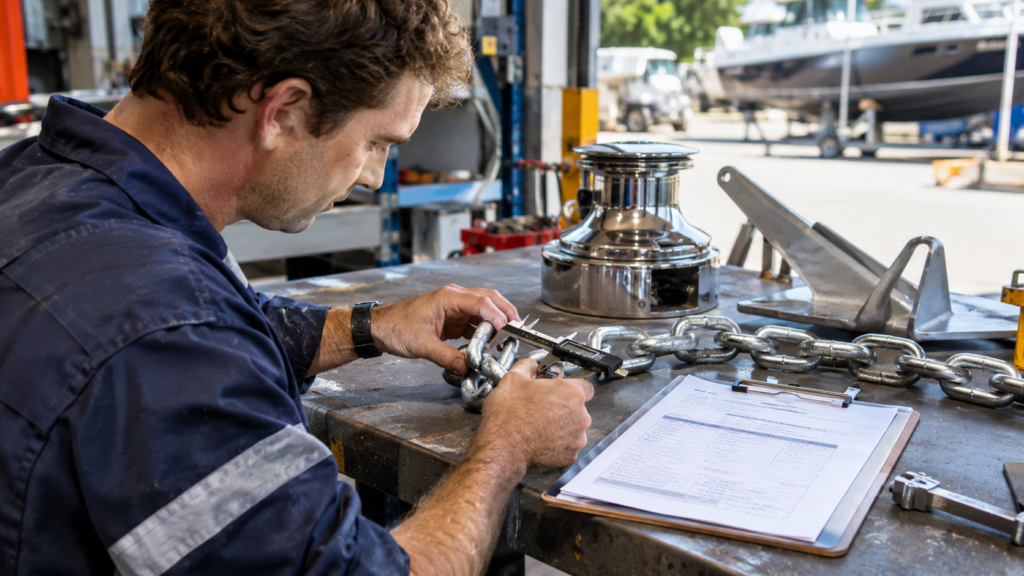
Is stronger always better when it comes to anchor chain? Discover why G43 remains a trusted choice for marine anchoring and how higher-strength chains can introduce additional considerations around brittleness, hydrogen embrittlement and long-term reliability.
When it comes to anchor chain, is stronger always better? The answer may surprise you.
Following the continued popularity and success of OMC G43 high-test galvanised anchor chain, competitors have begun introducing Grade 50 (G50) alternatives to the Australian marine market, promoting higher strength ratings as the next evolution in anchor chain technology.
While imitation is often considered the sincerest form of flattery, stronger doesn't necessarily mean better.
With G50 now being marketed as an upgrade, there's an important question that often gets overlooked:
At what point does increasing the strength of anchor chain stop delivering meaningful benefits — and start introducing additional engineering considerations?
At Ozzi Marine, we believe marine anchor chain should be engineered specifically for the harsh marine environment, not simply manufactured to achieve the highest possible strength rating.
That's why we continue to stand behind OMC G43 high-test galvanised anchor chain, delivering an exceptional balance of proven strength, corrosion protection, dimensional accuracy and independent testing.
Because when it comes to anchoring, reliability matters more than a number on a specification sheet.
Why Grade 40–45 Has Been a Proven Choice for Marine Anchoring
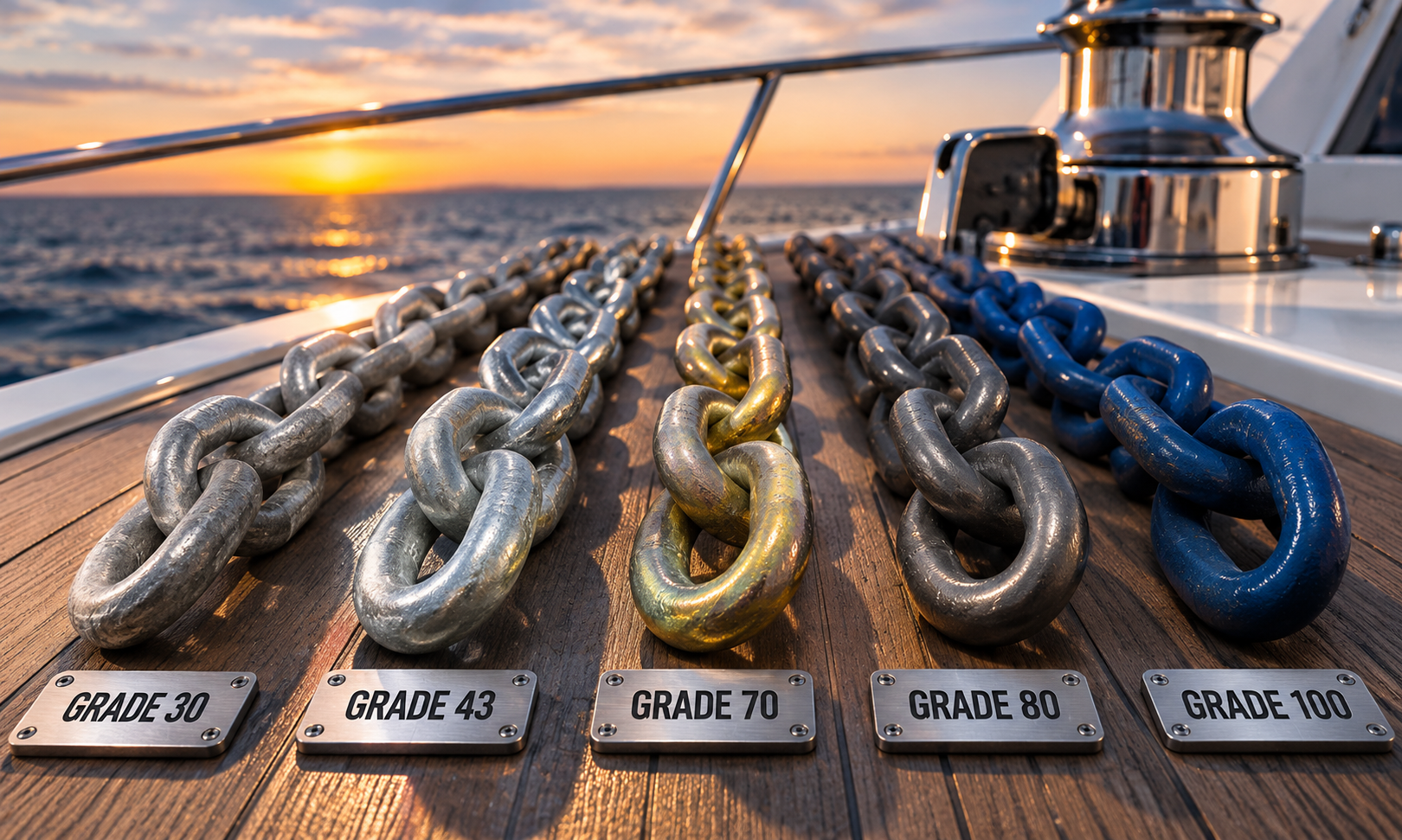
For decades, Grade 40 and Grade 43 high-test chains have been widely used in recreational marine anchoring applications around the world.
There are good reasons for this.
Marine anchor chain must deliver more than tensile strength. It needs to withstand repeated loading, corrosion, abrasion, movement through a windlass and long-term exposure to demanding saltwater conditions.
G43 provides a practical balance of these requirements.
Compared with traditional Grade 30 chain, OMC G43 delivers substantially greater strength while maintaining the characteristics required of a properly engineered marine anchoring system.
This is why Grade 40–43 chain has become such an established choice in recreational boating.
Although other chain grades are used in specialist marine and commercial applications, the longstanding use of G40–G43 demonstrates that reliable anchoring does not require continually increasing the strength grade.
Can Anchor Chain Be Too Strong?
It might sound counterintuitive, but increasing the strength of steel can introduce additional metallurgical considerations.
Steel strength is only one mechanical property.
Other important properties include:
Ductility: The ability to deform under stress before fracture.
Toughness: The ability to absorb energy and resist cracking.
Fatigue resistance: The ability to withstand repeated loading.
Corrosion resistance: The ability to survive prolonged exposure to the marine environment.
Depending on the steel composition and manufacturing process, increasing strength and hardness can affect some of these characteristics.
A higher breaking load does not automatically mean better toughness, greater fatigue resistance or longer service life.
For anchor chain, these distinctions matter.
An anchoring system experiences changing loads from wind, waves, currents and vessel movement. Its components must be selected for those operating conditions, rather than maximum tensile strength alone.
The objective should never be strength at any cost. It should be the right strength, supported by the right material properties.
Hydrogen Embrittlement: The Hidden Risk of Higher-Strength Steels
One of the most important considerations when discussing higher-strength steel in marine environments is hydrogen embrittlement.
Hydrogen embrittlement occurs when hydrogen enters susceptible steel and reduces its ability to deform before fracturing.
Under certain conditions, this can contribute to cracking or sudden failure at loads below the material's expected strength.
Why does hydrogen embrittlement matter in marine applications?
Marine environments expose steel to moisture, saltwater and electrochemical reactions.
Hydrogen can also be introduced during manufacturing and surface treatment processes, including certain acid-cleaning and galvanising operations.
Research into high-strength offshore mooring steels has demonstrated that susceptibility to hydrogen-assisted cracking can increase as steel strength increases.
However, the risk depends on several factors, including:
Steel composition and microstructure.
Hardness and heat treatment.
Manufacturing and galvanising processes.
Exposure conditions.
Applied and residual stresses.
When selecting anchor chain, strength must be considered alongside ductility, toughness and resistance to environmental degradation.
For many conventional anchoring applications, there is little reason to pursue a higher chain grade when a properly specified G43 chain already provides the required strength.
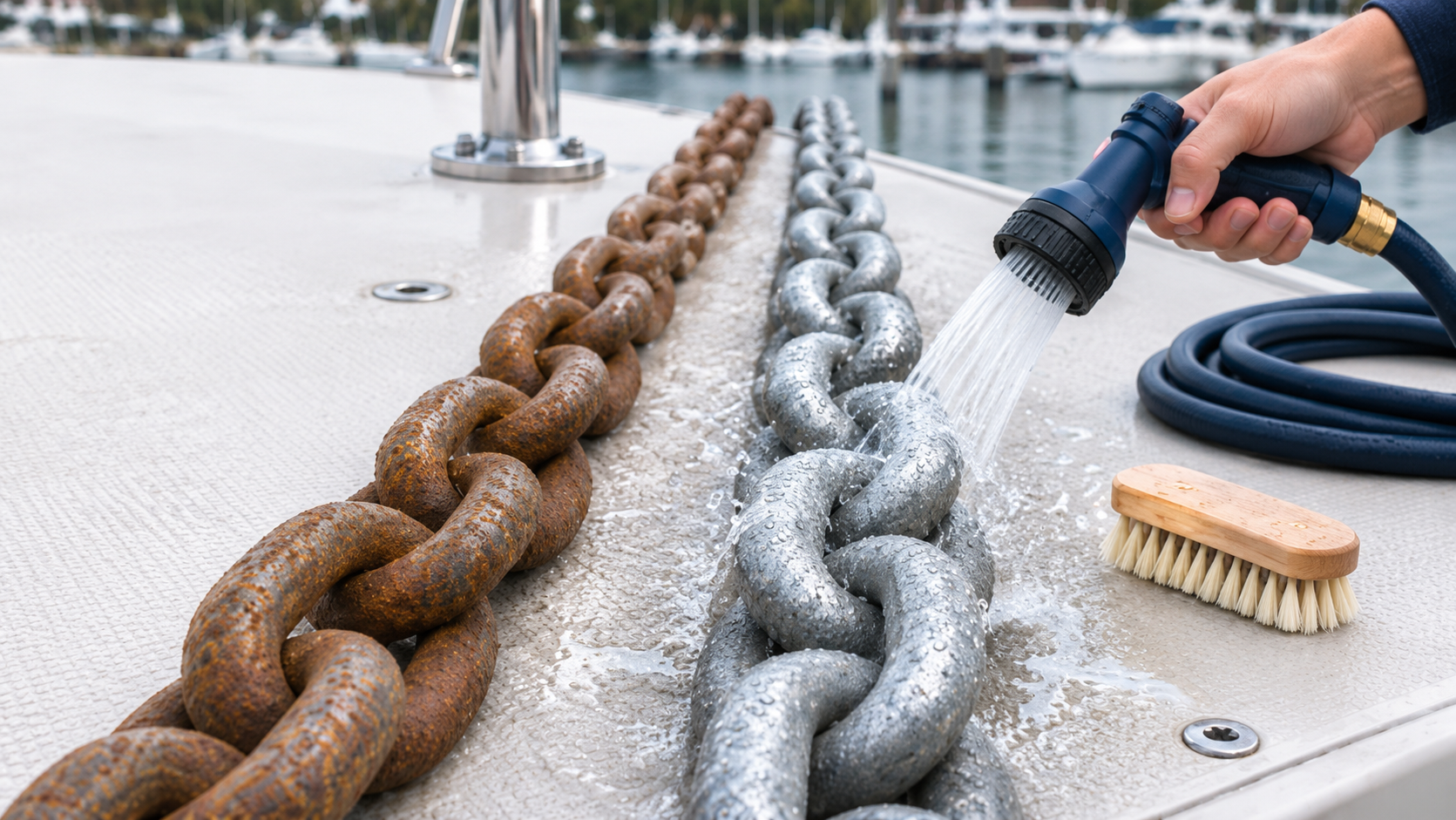
Galvanising: Why Corrosion Protection Matters More Than a Grade Number
Anchor chain spends its working life exposed to one of the most corrosive environments imaginable.
Even the strongest chain can deteriorate when its protective coating is inadequate.
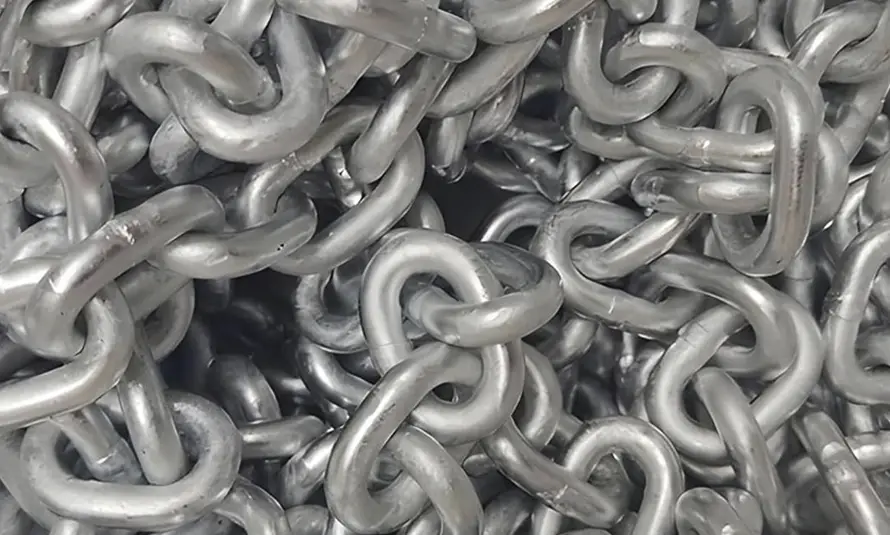
OMC G43 anchor chain is manufactured with a minimum specified hot-dip galvanised coating thickness of 85 microns.
This protective zinc coating is designed to help withstand prolonged marine exposure.
A quality galvanised coating provides several important benefits:
Sacrificial protection of the underlying steel.
Reduced exposure to premature rust formation.
Improved durability in saltwater environments.
Longer potential service life when properly maintained.
A higher strength grade does not guarantee a thicker galvanised coating.
When comparing anchor chain, customers should always ask for the actual coating specification.
At Ozzi Marine, we believe corrosion protection should be a fundamental requirement, not an afterthought.
Windlass Compatibility: Precision Matters
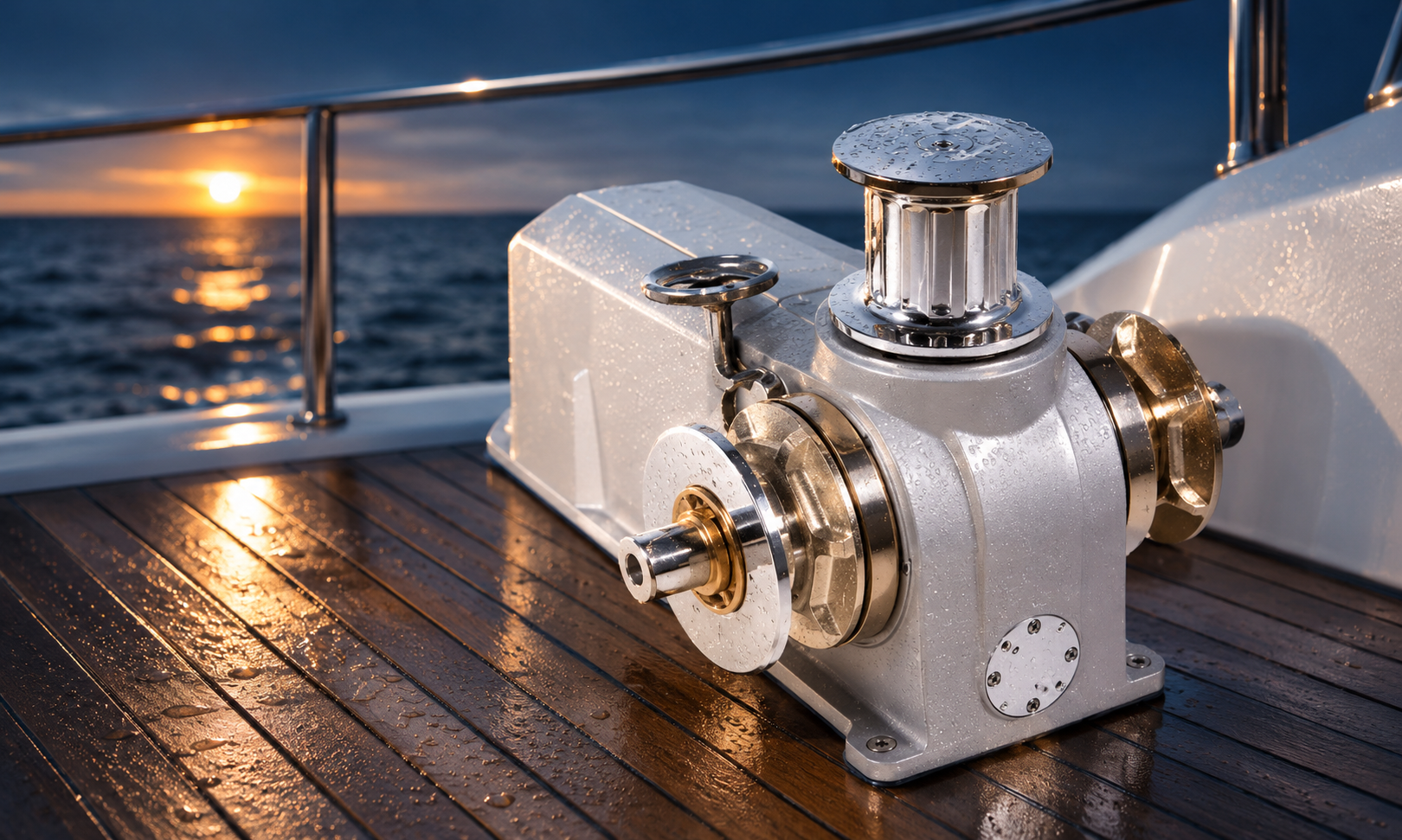
Anchor chain must work correctly with the vessel's existing windlass.
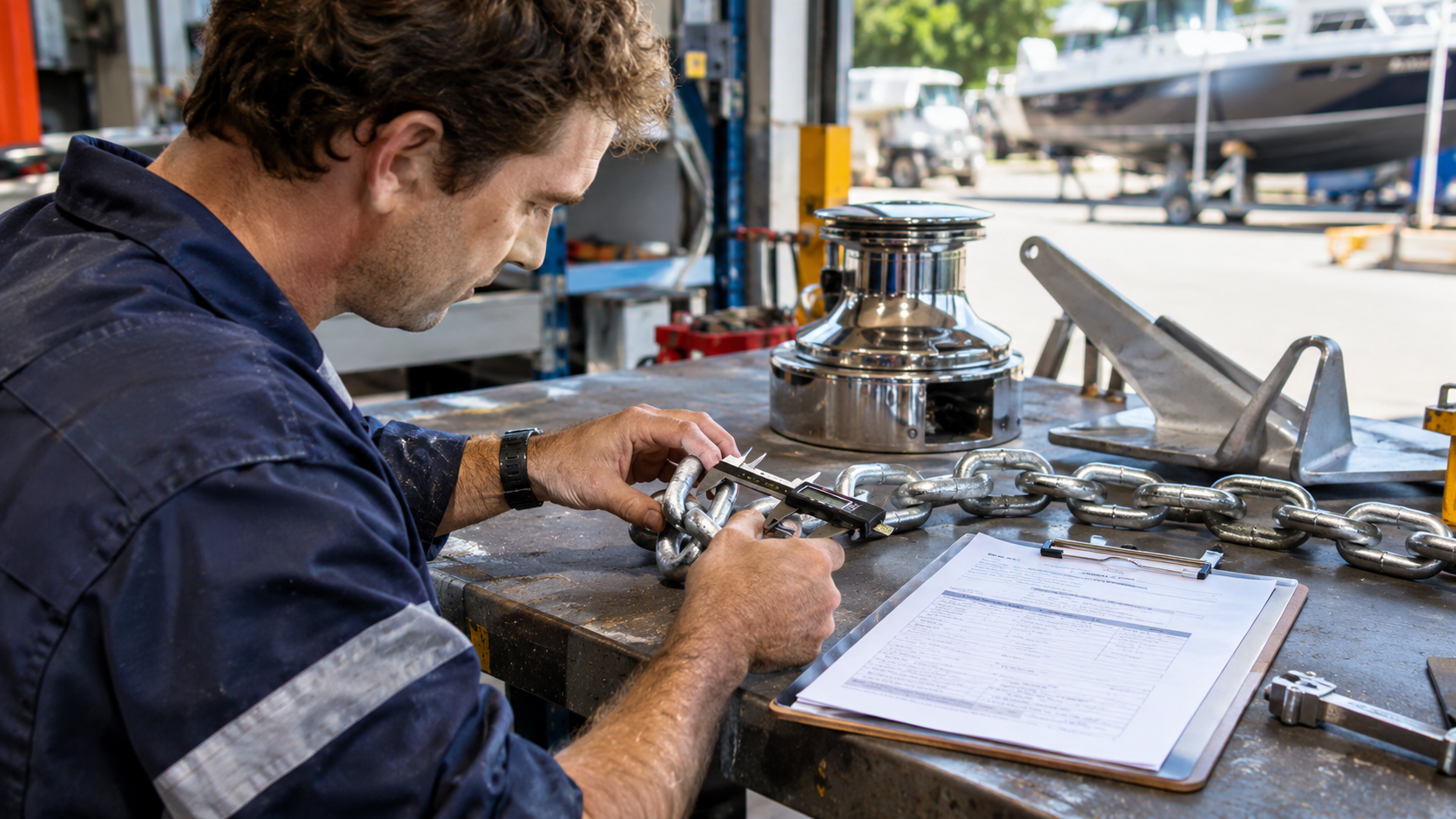
Even small dimensional differences between chain links can result in poor engagement with the gypsy, causing slipping, jamming and accelerated component wear.
OMC G43 is available in Australian short-link dimensions, along with selected ISO and DIN configurations.
Our focus is on providing correctly calibrated chain suitable for the intended windlass.
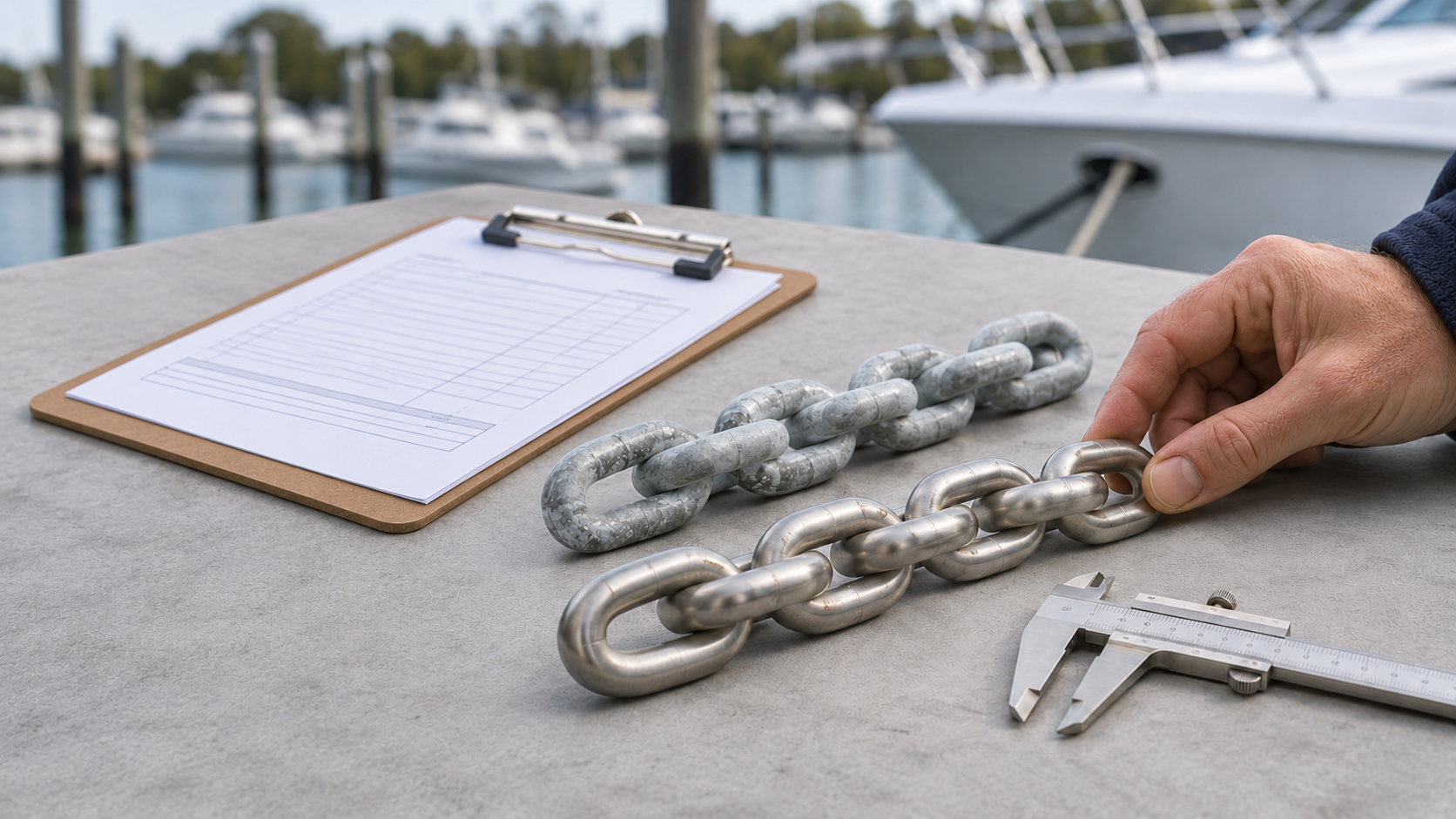
Before purchasing replacement anchor chain, always confirm the link diameter, pitch and internal width required by your windlass manufacturer.
A higher strength rating is meaningless if the chain cannot operate reliably through your anchoring equipment.
Call Ozzi Marine - Australia's Marine Chain Specialists to help you.
Independently Tested Strength You Can Trust
At Ozzi Marine, we believe customers should be able to verify the quality of the anchor chain they purchase.
OMC G43 anchor chain is supported by production quality controls and independent testing, with batch test certification available from a NATA-accredited laboratory.
Our chain is also stamped for product identification and traceability.
Rather than asking customers to rely solely on a manufacturer's claimed grade, we provide access to documented test results.
For boat owners, marine installers and commercial operators, that additional assurance is an important part of choosing dependable anchoring equipment.
Why Ozzi Marine Continues to Recommend G43
At Ozzi Marine, we don't believe that increasing a chain's grade number automatically makes it better suited to marine anchoring.
We believe in selecting materials based on the complete requirements of the application.
OMC G43 delivers:
Proven high-test strength for properly specified anchoring systems.
Minimum specified 85-micron hot-dip galvanising.
Australian short-link and selected international dimensional options.
Independent testing with NATA-accredited certification available.
Product identification and traceability.
A balance of strength and practical marine suitability.
While higher-strength steels introduce additional considerations around material properties, hardness and potential hydrogen embrittlement, OMC G43 remains focused on delivering the performance required for conventional marine anchoring.
An Important Distinction: Galvanised vs Stainless Steel Anchor Chain
It's important to clarify that the considerations discussed throughout this article relate specifically to galvanised carbon and alloy steel anchor chain.
Stainless steel anchor chain is an entirely different proposition, with fundamentally different metallurgical characteristics.
While increasing the strength of conventional galvanised steel can introduce additional considerations around hardness, ductility, toughness and hydrogen embrittlement, these characteristics cannot simply be applied to stainless steel based on its strength grade alone.
Not all stainless steels are created equal, either.
Traditional 304 and 316 stainless steels have an austenitic microstructure and rely on chromium-rich passive films for corrosion resistance. However, they can be susceptible to pitting, crevice corrosion and chloride-induced stress corrosion cracking under certain marine conditions.
Duplex stainless steel, particularly 318LN / 2205, is a different beast altogether.
Unlike conventional stainless steel, duplex stainless steel features a carefully engineered combination of austenitic and ferritic microstructures.
This dual-phase structure provides several important advantages:
- Higher mechanical strength: Allowing duplex stainless steel anchor chain to achieve Grade 60 strength ratings.
- Exceptional corrosion resistance: Improved resistance to pitting and crevice corrosion compared with conventional 304 and 316 stainless steels.
- Improved resistance to stress corrosion cracking: Particularly chloride-induced stress corrosion cracking, a recognised concern with conventional austenitic stainless steels.
- A different balance of mechanical properties: Combining high strength with useful toughness and ductility when correctly manufactured and processed.
Importantly, duplex stainless steel is not immune to hydrogen embrittlement. Its susceptibility depends on its microstructure, manufacturing processes, environmental exposure and operating stresses.
However, the metallurgical behaviour of duplex stainless steel is fundamentally different from that of higher-strength galvanised carbon or alloy steels.
This is why Ozzi Marine recommends different materials for different applications.
For conventional galvanised anchoring systems, we believe OMC G43 provides an excellent balance of strength, corrosion protection and proven marine suitability.
For customers seeking the additional benefits of stainless steel, our OMC 318D SSS Duplex Stainless Steel Anchor Chain offers an alternative, combining Grade 60 strength with the enhanced corrosion resistance and mechanical properties of duplex stainless steel.
The takeaway?
Our position isn't that higher-strength anchor chain is inherently inferior. It's that strength must always be considered alongside the steel's metallurgy, corrosion resistance, manufacturing quality and intended application.
G43 galvanised and Grade 60 duplex stainless steel are two different engineering solutions — and both have their place in marine anchoring.
The Verdict: Choose Engineering Over Marketing
The strongest chain on paper isn't necessarily the best chain for your boat.
For decades, Grade 40–43 high-test chain has been an established choice in marine anchoring, delivering a practical combination of strength and suitability for the demanding marine environment.
Before paying attention to a higher grade number, ask whether the additional strength is actually necessary — and whether the chain's galvanising, dimensions, testing and material properties have been properly considered.
At Ozzi Marine, our choice remains clear.
OMC G43 — engineered for marine anchoring, independently tested and built for Australian conditions.
Discover OMC G43 Anchor Chain
Ozzi Marine supplies premium anchor chain and anchoring equipment to boat owners, marine professionals and chandlery distributors across Australia.
Explore our OMC G43 range or speak with our team about selecting the correct chain for your vessel.
Ozzi Marine — Australia's Marine Chain Specialists.